Showing posts with label writing standards. Show all posts

Monday, April 14, 2008

Do Travel Writers Go to Hell?

Abel Keogh

Do Travel Writers Go to Hell?


According to The Daily Telegraph, writer Thomas Kohnstamm admitted to faking large sections of The Lonely Planet guidebooks he wrote.

THE Lonely Planet guidebook empire is reeling from claims by one of its authors that he plagiarised and made up large sections of his books and dealt drugs to make up for poor pay.

Thomas Kohnstamm also claims in a new book that he accepted free travel, in contravention of the company's policy.His revelations have rocked the travel publisher, which sells more than six million guides a year.

Mr Kohnstamm, whose book is titled Do Travel Writers Go To Hell?, said yesterday that he had worked on more than a dozen books for Lonely Planet, including its titles on Brazil, Colombia, the Caribbean, Venezuela, Chile and South America.

In one case, he said he had not even visited the country he wrote about.

"They didn't pay me enough to go Colombia,'' he said.

"I wrote the book in San Francisco. I got the information from a chick I was dating - an intern in the Colombian Consulate.

"They don't pay enough for what they expect the authors to do.''

If the pay was so bad, one has to wonder why Kohnstamm agreed to write the travel guides in the first place. If he was talented enough to fool The Lonely Planet’s editors, one would think he should have tried his hand at fiction.

But more striking is why a publishing company (in this case Three Rivers/Crown) would reward a writer who admits to defrauding another publisher with a publishing contract. With other non-fiction books having difficulty passing the truth test, I’d think that a publisher would be hesitant to publish a book from an admitted liar.

Note: Blog entry cross-posted at Abel Keogh's blog.

Monday, March 31, 2008

Memoir Writing Tips

Abel Keogh


A funny thing happens to writers when we overcome a challenging event in our lives such as the death of a loved one, an abusive relationship, horrible childhood, addiction, or other horrific event: We want to share our experience with the world by writing a book.


Our motivations are usually good. We want others to learn and befit from our experience and, hopefully, not make the same mistakes. Yet, unless you’re a famous actor, athlete or other well-known individual, most people outside your family and friends aren’t going to care about it.


Despite this, the literary world is full of wannabe authors who want to share their story. After going through the arduous process of finding a publisher for Room for Two, I know. Literary agents and publishers are inundated with personal story manuscripts every day.


If you have a personal story you want to share, here are three tips to things to help your story stand out and make agents, publishers, and readers take notice.


1. Ask Yourself: Why Would Others Care?


Your story can be very important to you but can have no emotional impact on others. There are lots of books out there about overcoming an addition, a disastrous marriage, or the loss of a spouse, child, or loved one. You need to be able to take stand back and objectively ask yourself what makes your particular story unique enough that other people would care enough to read about it.


Everyone will lose a loved one at some point in their lives. Million go through a divorce or become addicted to drugs, alcohol, or other substances. What makes your experience different from others? What did you learn and how did you learn it that makes your story interesting enough that someone would actually take the time to read it?


If you can find something in your experience that is truly unique and sets your experience apart from thousands and millions of others that have experienced something similar, then you’ll have a leg up on getting agents and publishers to notice your manuscript and readers actually care about it.


2. Resist the Temptation to be a “Wronged Hero”


When writing a very personal story, it’s easy to turn yourself into a “wronged hero.” You know, the flawless individual who experiences something bad and valiantly continues to the uphill struggle against people and society who just don’t understand what you’re going through to make life and the world right again.


Don’t do this. We’re all human. Whether its lapses in judgment, a bone-headed decision, or a simple mistakes – we all do things that we regret. After going through a very heart-wrenching experience our judgment is often emotionally clouded and we find ourselves doing and saying things we wouldn’t under normal circumstances.


If you portray yourself as the perfect person, readers will not only know you’re being phony but they’ll start to wonder if there’s parts of the story you’re being less than honest about as well. If you’re can’t write honestly about yourself, the good and bad decisions you’ve made, and put them in a framework for the reader to understand, then don’t waste your time writing about it. Readers should be able to understand the context in which a choice was made and even if they don’t agree with your evenutal decision.

3. Know How to Tell a Story

The way you tell your story counts. It’s not just the words you choose to use (thought that’s important) but where the story begins, where it ends, and what you put in between.


When sharing person stories, it’s tempting to include every person detail or side story we can think of that shows how cute our kids are or what a jokester Aunt Sarah is. Yet unless you’re writing to your immediate family and friends, those elements can be detracting. Instead, focus your story like a laser beam on the people, scenes, and dialogue that’s important to keep the story flowing and the reader’s interest peaked. My first draft of Room for Two was approximately 120,000 words. The version that made it to print is around 86,000. I was fortunate to find a good editor that pointed out the fluff and helped focus my writing on the real meat of my story.


Remember, writing is an art and it takes a creative mind to know the best way to draw a reader into your personal experience in such a way that care about you and want to read about it. If done right, you can have a wonderful book that can help and entertain thousands of others.

Tuesday, March 4, 2008

Memoirs: Stranger than Fiction

Abel Keogh


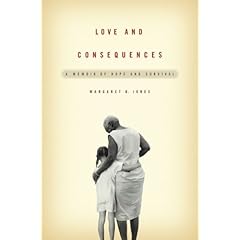
Love and Consequences by Margert B. Jones


Publishers should be kicking themselves. For the second time in less than a week, a critically-acclaimed memoir has been exposed as a fraud.

In "Love and Consequences," a critically acclaimed memoir published last week, Margaret B. Jones wrote about her life as a half-white, half-Native American girl growing up in South-Central Los Angeles as a foster child among gang-bangers, running drugs for the Bloods.

The problem is that none of it is true.

Margaret B. Jones is a pseudonym for Margaret Seltzer, who is all white and grew up in the well-to-do Sherman Oaks section of Los Angeles, in the San Fernando Valley, with her biological family. She graduated from the Campbell Hall School, a private Episcopal day school in the North Hollywood neighborhood. She has never lived with a foster family, nor did she run drugs for any gang members. Nor did she graduate from the University of Oregon, as she had claimed.

This story comes less than a week after it was revealed that the Holocaust memoir, “Misha: A Mémoire of the Holocaust Years” by Misha Defonseca, was a complete fabrication, and it's been only two years since most of James Frey's best-selling “A Million Little Pieces” was proven to be wildly embellished, exaggerated, and falsified. The accuracy of another best-selling memoir, “A Long Way Gone: Memoirs of a Boy Soldier” by Ishmael Beah are also being raised after series of articles by an Australian newspaper. (Beah, stands by what he wrote.)

What's going on here? Are publishers too lazy to investigate stories that seem too good to be true? Do authors feel their story won't be published or taken seriously unless they make up parts of their life?

Granted, memoirs are an imperfect art and are only as good as the author's memory. But there's a difference between recalling that an advent happened on a Monday when it, in fact, happened on Wednesday, and simply making up scenes, characters, or an entire life.

Whatever is happening, it's not good for the memoirs genre. Not only does it make it less likely that publishers will pass on memoirs in the future, but that readers are less likely to purchase a memoir when browsing bookstore shelves.

To restore readers' trust in the genre authors and publishers need to come up with a voluntary set of standards to which they're willing to adhere. Though not a comprehensive list, here are three ways to start.

1. If asked by the publisher, authors should be prepared to verify as much of the story as possible. This includes names and contact information of people who can corroborate the story, places, and approximate dates when events occurred. This may not always be easy to do if someone is writing about events that happened several decades ago but the author should be willing to authenticate as much as the story as possible. If authors knew there was a good possibility their story could be vetted before it hit the press, it would probably discourage liars like Seltzer and Frey from trying to get published.

2. Publishers need to be willing to investigate. If the scenes, dialogue, or the overall narrative sounds contrived or too good to good to be true, it's time to do some fact checking. Reviewers of Love and Consequences mentioned that the dialogue seemed "embellished" and scenes felt "self-consciously novelistic at times." Such red flags should lead the publishers to do some simple fact checking. A background check and a few phone calls could have been done quickly and revealed that Seltzer's story was a lie.

3. The reader should be notified up front if names and places have been changed or events have been compressed or told in a different order than they actually happened. Some memoirs have such a disclaimer but it's by no means an industry standard. If authors changed something, let the readers know why it was done. Such a disclaimer doesn't make a memoir any less powerful but goes a long way to establishing trust with the reader.

Memoirs can make powerful and entertaining reading. Standards would go a long way to rebuilding readers’ trust in a genre that is suffering from brazen acts of dishonesty and deceit. Without some standards in place, future memoirs run the risk of being bypassed by readers altogether, or worse, becoming classified as fantasized fiction.